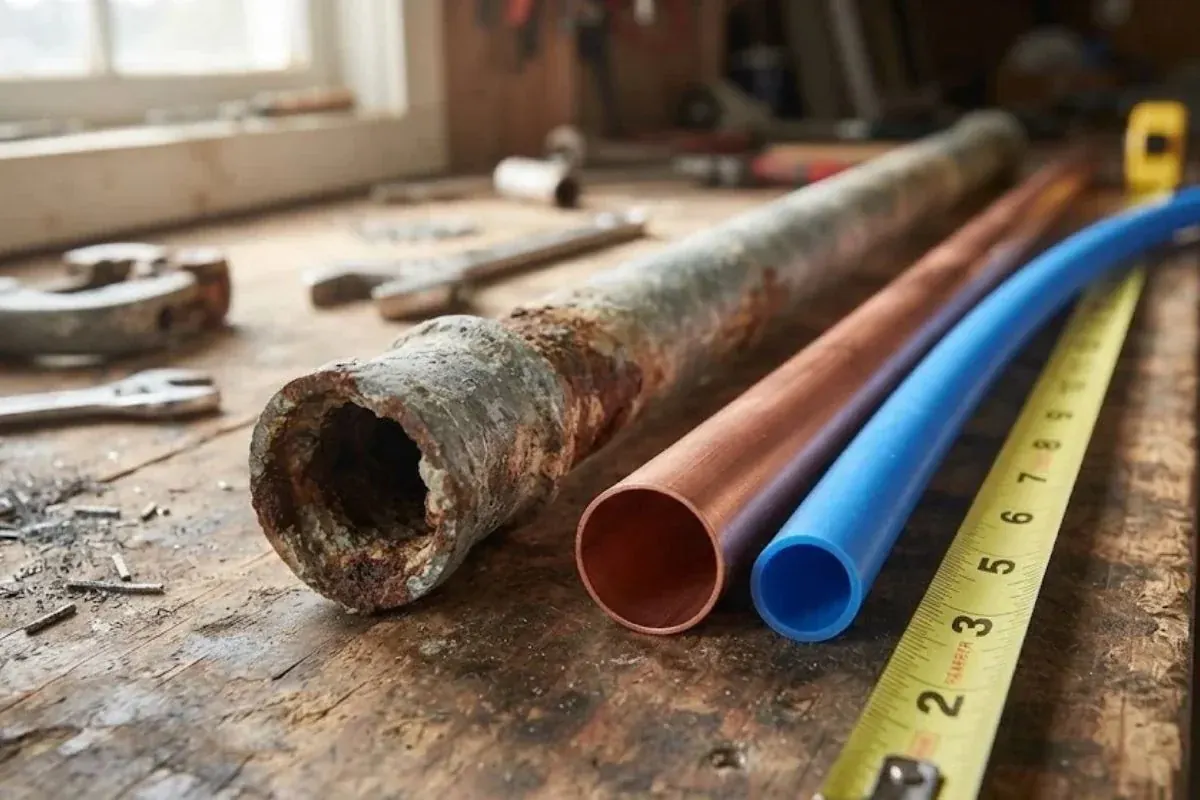
The main type of plumbing pipes in a house are copper, PEX, CPVC, PVC, ABS, cast iron and galvanized steel. The first three carry clean water in. The rest carry waste out. Each fails in its own way, so knowing which you have tells you what to watch for.
The table below sums up each one, and the sections after it explain how to identify them without cutting anything open.
| Pipe | Typical use | Caution |
|---|---|---|
| Copper | Hot and cold water supply inside the house. | Pinholes can form where water is aggressive or flow is fast. |
| PEX | Flexible water supply, often in newer work and repipes. | Sunlight damages it, so keep it covered outdoors and in attics with windows. |
| CPVC | Hot and cold water supply in many homes. | It can turn brittle with age and crack at fittings. |
| PVC | Drain, waste, vent and some cold water lines. | It is not meant for hot water. |
| ABS | Black plastic drain, waste and vent lines. | Local rules on where ABS may be used vary. |
| Cast iron | Older drain and waste stacks. | It rusts inside and can crack or leak at joints. |
| Galvanized steel | Older water supply lines. | It corrodes inside, narrows and cuts flow and pressure. |
How to tell what you have
Start where pipes are visible: under sinks, around the water heater and near the main shutoff. Copper is orange-brown or green when aged and makes a ringing sound if tapped. PEX is flexible plastic, usually red, blue or white. White or cream rigid pipe could be PVC or CPVC, and the printing on the side often says which.
Black rigid plastic in a drain is usually ABS. Heavy gray metal with a rough surface and a hub joint is typically cast iron. Gray threaded pipe that a magnet sticks to is often galvanized steel. If you cannot tell, a photo sent to us is a fair start, and a camera inspection tells the rest.
- Never cut or drill a pipe you have not identified.
- Do not tap hard on old cast iron or galvanized steel, since they can crack.
- Keep a flashlight and a phone camera handy and label each photo by room.
Choosing between pipe types for a repair
The best pipe for a repair is rarely the one you like best. It is the one that suits the existing system and the job. Copper to PEX transitions are common and reliable when the right fittings are used, but mixing metals without the right couplings can cause corrosion. Plastic drain lines take adhesives that differ by material, and the wrong glue on the wrong plastic can leave a weak joint.
Water supply pipes
- Copper, PEX, CPVC and galvanized steel
- Sized by flow, with pressure in mind
- Judged by pinholes, scale and low flow
- Usually repaired or repiped in sections
Drain, waste and vent pipes
- PVC, ABS and cast iron
- Sized for slope and gravity
- Judged by clogs, cracks and odors
- Often diagnosed with a camera
Want a plumber to identify your pipes?
Call and describe the leaks, the low pressure or the pipe color. We can say what to look for next.
Willingboro, NJ: what to know about the pipes in your house
The first Levitt & Sons homes in Willingboro sold in June 1958, so houses in the township's older parks span many decades of owners and repairs. We do not assume which pipes any one house has. Over the years, sections get replaced, and a camera or a look at the exposed pipe is the only way to know.
The Willingboro Municipal Utilities Authority posts a Lead Service Line Inventory on wmua.info and asks residents to help identify service line materials. The service line is the pipe from the street to your meter or shutoff, and it is separate from your indoor pipes. Check the inventory page and report what you find at your main shutoff.
Mount Holly is a different story. Its Historic District covers 260 acres, was added to the National Register on 20 February 1973 and has 39 contributing buildings, with more than 250 dwellings standing by 1800. In older homes like those, pipes are often a mix from several eras, so expect an inspection before any repair plan.
Where pipe trouble shows up first
Rust or brown water
Corroding steel or iron upstream. Run the tap and note whether it clears.
Low pressure at one fixture
Narrowing inside old supply pipe or a partly closed valve.
Pinhole spray or green stains
Copper wearing through. A single pinhole is often not the only weak spot.
Slow drains in several rooms
A scaled or cracked drain stack, or a main line with roots.
If supply pipes keep failing in different spots, patching becomes a game of chasing leaks. A full repiping plan may cost less over time than repeated repairs. If the problem is outside the house, water service line repair is a separate job from anything inside the walls.
What shapes a pipe repair or repipe quote
Insurance often covers sudden pipe bursts but typically not the pipe that failed from age. Ask your insurer what is excluded before work begins. Photographs of the pipe, the stains and the shutoff valve all help if you file a claim.
Questions from Willingboro homeowners
Which type of plumbing pipe lasts the longest?
Lifespan depends on water, installation and conditions, not just material. Copper and cast iron can last many decades in good conditions, but all of them fail when abused or unlucky.
Can I mix copper and PEX?
Yes, with the right transition fittings. Skipping the proper coupling between dissimilar metals can lead to corrosion.
Is galvanized pipe dangerous?
It is not dangerous to touch, but it corrodes from inside and chokes flow. Many owners replace it for pressure, not for safety.
What does the black pipe under my sink mean?
Black rigid plastic on a drain is usually ABS. A black flexible line may be a different material, so send us a photo.
How do I find what my service line is made of in Willingboro?
Start with the Lead Service Line Inventory on wmua.info, which asks residents to help identify the material. Then look at the pipe where it enters your home near the main shutoff and note its color and whether a magnet sticks.
We work on homes in Burlington Township and Mount Holly too. In older houses it helps to know the pipe type before the visit, so send a photo of the shutoff area if you can.