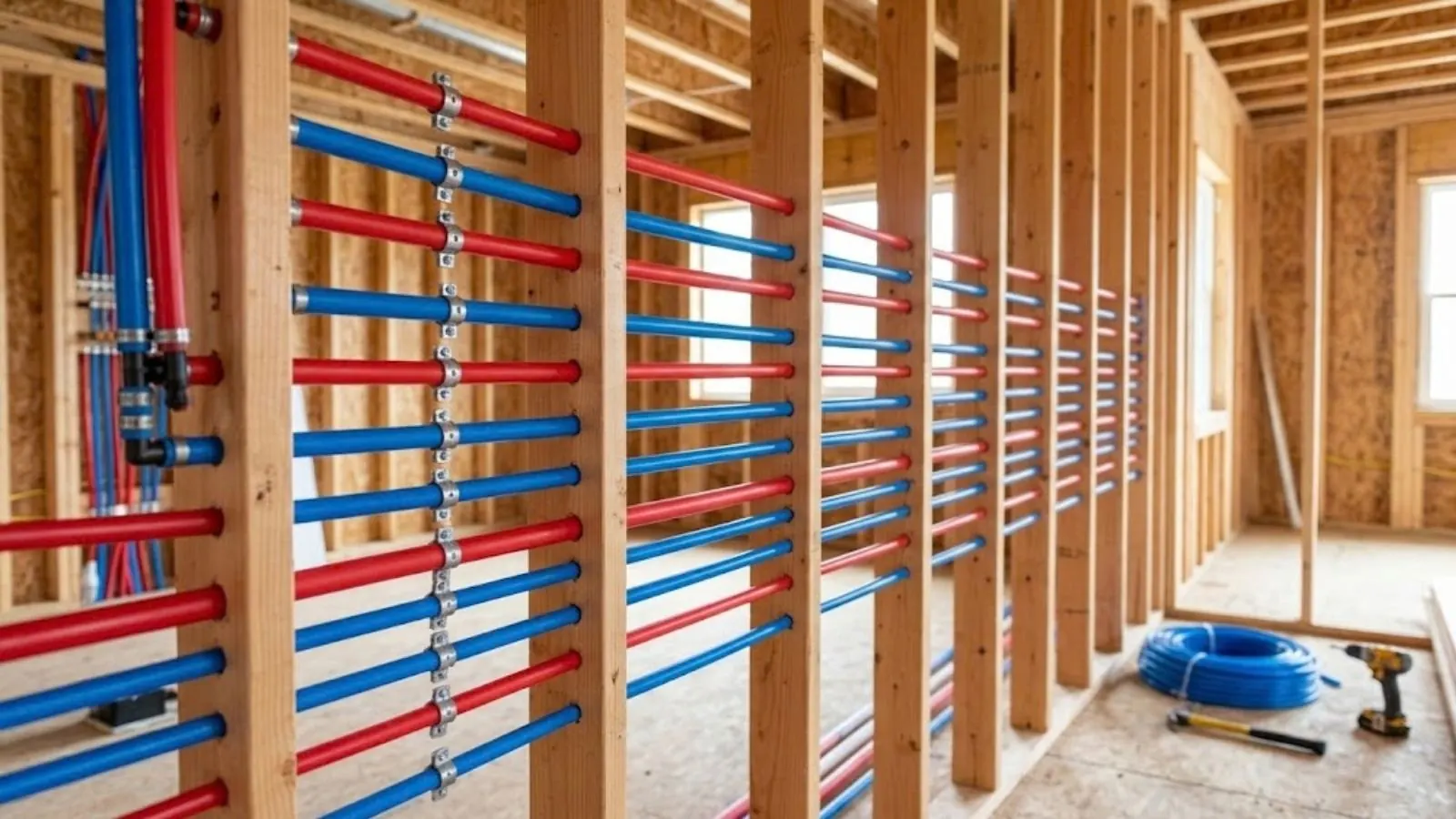
Repiping means replacing the water supply lines inside your home, and it is a big decision. This page explains repiping in Willingboro, NJ, from the signs that tell you it is time to the process, the disruption and the cost factors. We book visits through our 24/7 line, with same-day appointments when available.
Signs the pipes are wearing out
Repeated leaks
A second or third pinhole in a short span suggests the pipe is failing, not just one joint.
Low water pressure
Corrosion and mineral buildup narrow the inside of a pipe over time.
Discolored water
Brown or orange water that comes back after running can point to corroding steel.
Visible corrosion
Green crust on copper or flaking on steel shows the pipe is deteriorating.
Frequent repairs
If you keep paying for patches, the total can approach the cost of new pipe.
Galvanized and polybutylene pipe
Galvanized steel corrodes from the inside and slowly closes up. Polybutylene was a gray or blue plastic used in some homes in past decades, and it has a poor record for failure. We do not know what pipe any given Willingboro house has. Levitt and Sons sold the first homes in June 1958, so many houses have had work done since, and a plumber looking at your pipes tells you more than a guess.
Low pressure: repipe or something else
Low pressure is not always a pipe problem. A partly closed valve, a failing pressure regulator, a clogged aerator or a problem on the service line can cause it. We check pressure at an outdoor spigot first, then trace where it drops. If the loss starts at the street side, the fix may be on the service line, which is separate from your house piping.
PEX or copper
PEX
- Flexible tubing, fewer joints
- Often faster to install
- Resists corrosion
- Needs protection from sunlight
Copper
- Long record in homes
- Rigid and neat
- Handles heat well
- Costs more and takes longer
Both are accepted in many places, and the right choice depends on the house and your budget. We explain the trade-offs before you decide.
Not sure repiping is the answer?
Call and describe the leaks. We will help you decide between repair and replacement.
Whole house or partial
A whole-house repipe replaces nearly all supply lines, and a partial repipe replaces one section, such as a bathroom or the lines under a kitchen. If only one run has failed, partial work may be enough. If the pipe is the same age and material everywhere, partial work may only delay the next repair.
What the work involves
Plan
We walk the house, locate the main shutoff and decide the routes.
Open access
We cut small openings in drywall where we need to reach the lines.
Replace
New lines go in, and fixtures are reconnected.
Test and close
We pressure test, check every connection and leave the walls ready for patching.
Expect the water to be off for a good part of the day, and plan for it. Drywall patching and painting are usually separate trades, so ask us what we leave ready. Dust and noise are part of the job.
Permits, inspections and the service line
Permit rules vary, so ask the Willingboro building department, which enforces the New Jersey Uniform Construction Code. The Willingboro Municipal Utilities Authority also keeps a Lead Service Line Inventory and asks residents to help identify service line materials. The service line runs from the main to your meter, and it is separate from the pipes inside your house, so repiping does not replace it. See our water service line repair page.
Before we quote, we look for the cause. A pinhole leak in copper can come from water chemistry, from a bad installation or from age. The Willingboro Municipal Utilities Authority posts an annual Report to Consumers on Water Quality, and reading it alongside a look at your pipe helps explain why a line is failing. We do not guess at the cause from the street.
Also tell us about your plans. If you will remodel a bathroom or kitchen within a few years, repiping before the new walls go up saves cutting twice. In cold snaps, new pipe in an exterior wall should be insulated, since January averages near 33 degrees Fahrenheit.
What repiping costs
Insurance usually does not pay for replacing worn pipe, but it may cover sudden water damage from a burst. Ask your insurer, and see our leak detection page if you are not sure where the leaks are.
Questions Willingboro homeowners ask
How long does a whole-house repipe take?
Most take a few days, depending on the size and layout of the house. We give you a timeline after seeing the home.
Will I be without water the whole time?
No. The water is off for part of each day while connections are made, and we tell you the plan beforehand.
Do I need a permit to repipe in Willingboro?
Permit rules vary, so ask the Willingboro building department. It enforces the New Jersey Uniform Construction Code and can tell you what applies.
Will repiping fix my low water pressure?
Only if the pipes are the cause. We check the regulator, valves and service line first so you do not pay for the wrong fix.
Does repiping include the line from the street?
No. The service line is separate from the house piping, and it is a different job.
We repipe homes in Mount Holly and Edgewater Park as well. Many Mount Holly buildings are historic, so we walk the house first and plan the openings carefully.