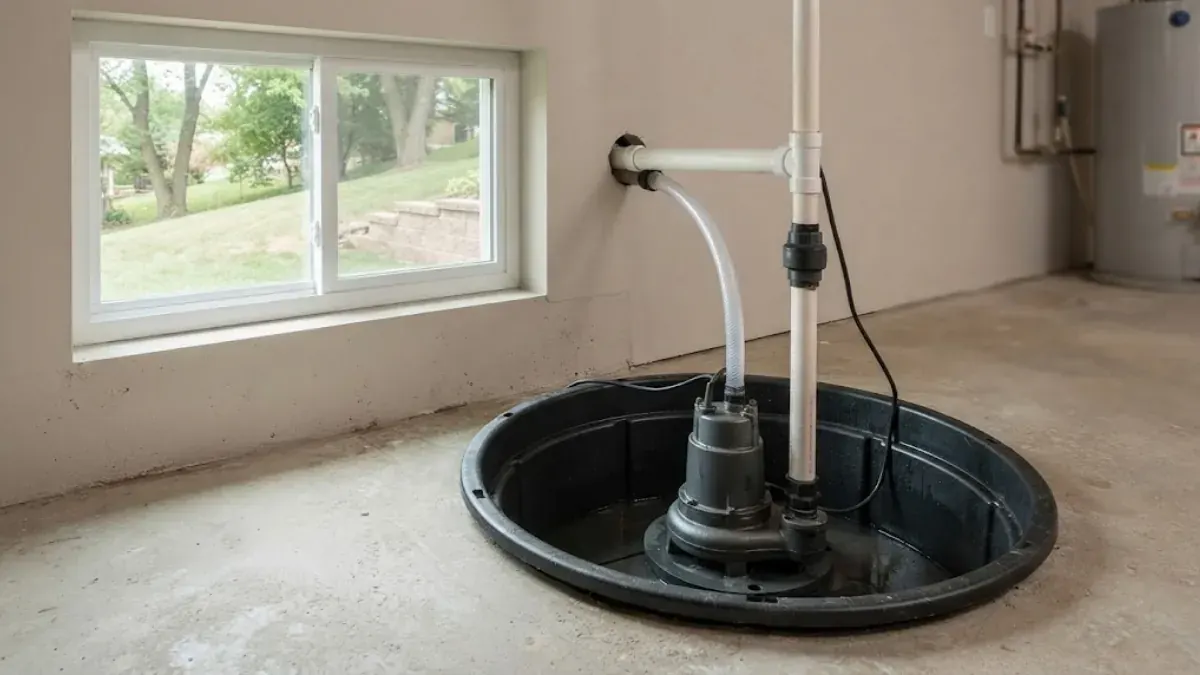
Sewer sump pump installation is the common phrase for adding a sewage ejector pump, which lifts toilet, shower and laundry waste from a basement fixture up to the main drain. A true sump pump is a different machine. It moves groundwater out of a pit and does not handle sewage.
Getting the two mixed up leads to flooded floors and failed inspections. We explain the difference below and how a proper install is done.
Sump pump or sewage ejector
| Sump pump | Sewage ejector | |
|---|---|---|
| Moves. | Groundwater and stormwater from a pit. | Toilet, sink, shower and laundry waste. |
| Basin. | Open or covered pit near the footing drain. | Sealed, gasketed basin with a vent. |
| Handles solids. | No. | Yes, up to a rated size. |
| Discharge. | Outdoors, away from the foundation. | Into the building sewer line. |
Many municipalities restrict sending groundwater into the sanitary sewer, so ask before you tie a sump pump into one. Our sump pump installation and repair service covers the groundwater side, and an ejector belongs with the sewage side.
When a house needs an ejector
Drains work by gravity. If a fixture sits lower than the sewer line leaving the house, wastewater cannot flow down to it, so it collects in a basin and a pump lifts it. Basement bathrooms, wet bars and laundry sinks are typical cases.
A plumber measures the fixture drain height against the building sewer before anything is bought. A fixture on a floor above the sewer line often needs no pump at all.
How a sewage ejector is installed
Plan the layout
We set the basin location, vent route and discharge path before cutting anything.
Open the floor
If the basement floor is concrete, we saw a pit large enough for the basin.
Set the basin
The basin sits level, with a gasketed lid and fittings sealed against gas.
Pipe and vent
Fixture drains enter the basin, a vent runs to the roof or an approved connection, and a check valve and shutoff go on the discharge.
Wire and test
The pump needs a suitable electrical circuit, and we test the float and run water through to confirm.
The discharge line rises and joins the building sewer. If the sewer is old or partly blocked, the pump will not fix that, so we often suggest a camera look at the line first. Our sewer line repair page explains what that finds.
Plan on a day or more when the floor must be cut, since patching concrete adds drying time. This is not a casual weekend project. The work combines sewer gas sealing, venting, electrical wiring and a possible permit, and a leak at the lid or the check valve is unpleasant to find later.
Sizing the basin and pump
The basin has to hold enough waste that the pump does not start every few seconds. A short-cycling pump wears out early, so a basin sized for the number of fixtures matters more than a bigger motor. Look for a pump rated for solids, commonly up to 2 inches, and a cast or sturdy housing.
- A check valve that stops waste from flowing back into the basin.
- A gate or ball valve so the pump can be serviced without draining the line.
- A float switch with room to move, clear of the basin wall.
- A high-water alarm that sounds before the basin overflows.
Pump runs constantly
A stuck float or failed check valve is a common cause.
Pump hums but nothing moves
The motor may be jammed or the impeller blocked.
Sewer smell near the basin
The lid gasket or vent may have failed.
Slow draining basement fixtures
The basin may be near full because the pump is not starting.
Do not flush wipes, feminine products or kitchen grease into a basement bathroom. Ejector pumps are built for human waste and paper, and anything else can wrap the impeller. A pump that is worked hard by rags is the most common reason we see for early failure.
Willingboro, NJ: permits, inspections and the sewer system
Permit rules vary, so ask the Willingboro building department. The Construction Official's office at 1 Rev. Dr. Martin Luther King Jr. Drive, 609-877-2200, enforces the New Jersey Uniform Construction Code, reviews permit applications and links a permit checklist and a required inspections list. Ask what an ejector or a new basement bathroom needs before work begins.
The Willingboro Municipal Utilities Authority runs water and sewer for the township and lists a sewer emergency line at 609-877-4962. A basement that backs up with sewage when your pump is fine is a reason to call that line.
Westampton and Mount Holly are separate towns with their own offices, and neighbors there should check with their own township rather than assume Willingboro rules apply.
Finishing a basement?
Call before the walls go up so the drain and vent routes stay open.
What drives the price
Sewage backup is often excluded from standard homeowners policies unless you add a water backup endorsement. Ask your agent before you finish a basement, and install a high-water alarm so a failed pump gets noticed early.
Before the plumber arrives
Write down every fixture you plan to drain into the basin.
Sketch where the basin could sit and where the sewer line leaves the house.
Clear the path to the electrical panel.
Call the building department and note what it asks for.
Questions from Willingboro homeowners
How long does a sewage ejector pump last?
Often around 7 to 10 years, depending on use and what goes down the drain. Wipes and grease shorten that, and a yearly test by pouring water into the basin shows whether the float and pump still work.
Does the pump need a vent?
Yes. The basin must be vented so gas leaves safely and the pump can move waste. We route the vent as part of the install.
Can a sump pump handle a toilet?
No. A sump pump is not built for solids or sealed against sewer gas. A toilet below the sewer line needs an ejector.
What happens during a power cut?
The pump stops, so the basin fills. A battery backup or a high-water alarm helps, and we can discuss options.
Does a finished basement bathroom in Willingboro need an ejector pump?
It depends on whether the fixture sits below the sewer line, and a plumber checks that. Ask the Willingboro building department about permits before starting.
We install pumps for homes near Westampton and in Mount Holly. Their utilities and permit offices are separate from Willingboro's.
If you live there, confirm your township's permit rules before you call, and have your fixture list ready.