Clogged drains in the house come from different things in each room. Kitchens catch grease, bathrooms catch hair and soap, laundry catches lint and toilets catch wipes. One slow fixture is usually a local clog, while several at once points to the main line.
Start with the safe fixes below, and call a plumber if they fail.
Room by room: what usually blocks the drain
Kitchen sink
Cooled grease and food scraps coat the pipe and harden.
Bathroom sink and tub
Hair binds with soap scum into a dense plug near the stopper.
Laundry
Lint and detergent residue build up in the standpipe and trap.
Toilet
Wipes labeled flushable do not break down like paper.
Floor drain
Dirt and debris collect where water rarely runs.
Disposals do not make grease harmless. A disposal grinds food into smaller pieces, but the pieces still settle in a horizontal run. Run cold water for 15 seconds after grinding, and keep fibrous scraps such as celery, potato peels and coffee grounds out of the sink.
In bathrooms, a hair catcher in the tub drain stops most clogs before they form. Pull the stopper every month or two and wipe away the gray film that builds around it. In laundry rooms, a lint trap on the discharge hose helps, and a washer that overflows its standpipe signals a blockage below it.
One fixture or the whole house
A local clog looks like
- One fixture drains slowly
- Other drains run fine
- A plunger or snake clears it
- The trap or stopper is dirty
A main line problem looks like
- Two or more fixtures back up together
- Gurgling in a floor drain or toilet
- The lowest drain fills first
- Clearing one fixture does not last
If the whole house is affected, stop using water and call us right away, because a main line problem needs a larger machine than a household plunger.
Safe fixes to try first
Plunge correctly
Cover the overflow opening with a wet rag and use a cup plunger on sinks, with a seal and steady strokes.
Clean the stopper and strainer
Pull out the hair that you can see and rinse the stopper.
Use hot tap water
Flush a grease slow drain with hot tap water and dish soap. Do not pour boiling water into a cracked or plastic fitting.
Clean the trap
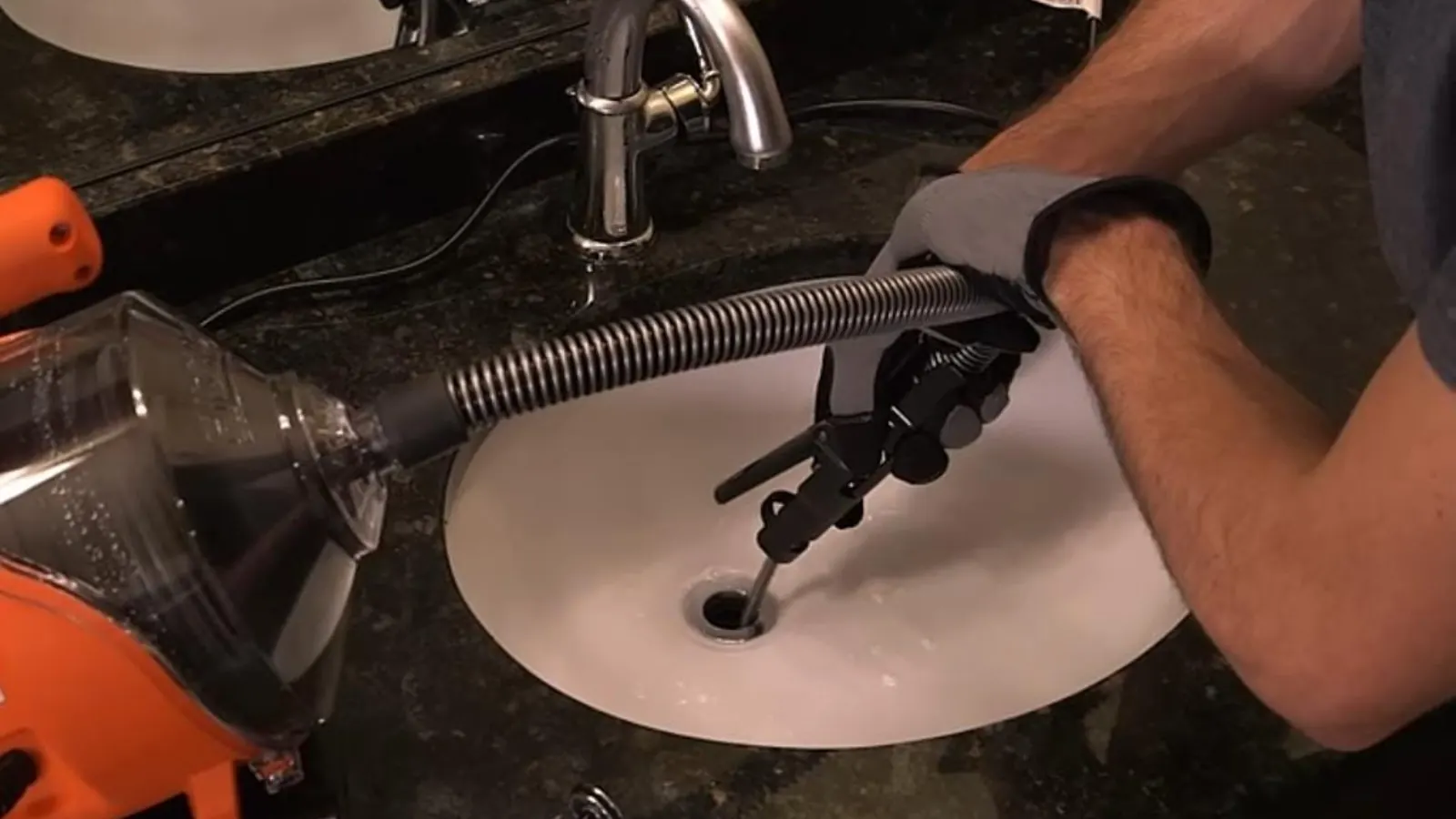
Put a bucket under a sink trap, loosen the slip nuts and clear the gunk by hand.
Baking soda and vinegar fizz harmlessly and may loosen light film, but they rarely clear a real clog, so treat them as maintenance.
For a toilet, a flange plunger with a firm seal works better than a cup plunger. If that fails, a closet auger reaches the bend without scratching the porcelain. Stop after a few tries, because repeated flushing can flood the bathroom.
What not to do
- Do not use chemical drain cleaners repeatedly. They sit in the pipe, can splash and may harm old fittings.
- Do not push a wire hanger far into a drain. It scratches the pipe and can snag a fitting.
- Do not flush wipes, paper towels or feminine products, even if the package says flushable.
- Do not pour grease down the sink. Collect it in a can and throw it away.
Willingboro, NJ: older sections, shared utility
Willingboro is divided into parks such as Buckingham Park and Pennypacker Park. Levitt and Sons built across the township, and its first homes sold in June 1958. Because those homes are now old, a drain that keeps clogging may be telling you about the line, so a camera view of your house is worth more than guessing.
The Willingboro Municipal Utilities Authority handles water and sewer and lists a sewer emergency number, 609-877-4962. Call it if the street main is backing up, and call us for a clog inside your house.
Mount Holly's historic district, with 250 or more dwellings by 1800, is a different housing story, and age alone says nothing about the pipes inside.
Keeping drains clear
- Run hot tap water down the kitchen sink for 30 seconds after washing greasy dishes.
- Use a hair catcher in every shower and tub.
- Wipe grease from pans with a paper towel and throw the towel away.
- Run a cup of baking soda followed by hot water through slow drains once a month.
- Keep a plunger and a small hand auger under the sink.
A slow drain is not always a clog. A blocked roof vent can make drains gurgle and drain slowly, because air cannot enter the pipe behind the water. If cleaning does nothing and the sound is more gurgle than trickle, mention it when you call.
Pipe age and what it means for clogs
Older drain pipe is not automatically bad, but rough interiors, shifted joints and roots all make clogs likelier. Depending on the house, a camera shows which of those, if any, is behind your slow drain. A line that clogs once a year is a maintenance matter. A line that clogs every month usually has a reason that cleaning alone will not fix.
Tried the safe fixes?
Call us and we will clear the line and find the cause.
When a plumber is the better call
If a plunger fails, water backs up in a second fixture or the clog returns within weeks, our drain cleaning crew will run a cable or hydro jetting as the next step. Jetting cleans the pipe wall, which can help if grease or scale keeps catching waste.
Standard policies usually cover sudden water damage from a backup only if you carry the right endorsement. Take photographs and check before you start cleanup.
Questions from Willingboro homeowners
Is baking soda and vinegar safe for drains?
Yes, it is mild, though it rarely clears a firm blockage. Rinse with hot tap water afterward.
Why does my kitchen sink clog so often?
Grease cools and sticks to pipe walls, collecting food scraps. Scraping plates and wiping pans cuts the buildup.
Can hair clog a bathroom drain by itself?
Yes. Hair wraps around the stopper and traps soap scum, forming a dense plug. A drain strainer prevents most of it, and a plastic drain claw can pull out what is already there for a few dollars.
Are flushable wipes really safe?
Not in our experience. They resist breaking apart and catch in bends, then collect more paper and grease behind them. Put them in the trash.
Do the Levitt-era sections in Willingboro have a common drain problem?
We cannot generalize across the township. Each line differs, and a camera shows what is in yours.
We also clear drains in Mount Holly and Westampton. Older homes in Mount Holly may have different plumbing, so a camera look helps there as well.
Tell us the age of your home when you call and which fixtures are slow.